Rolling out the Red Carpet

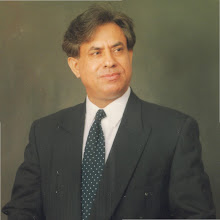
I welcome you to my blog and hope that you will like the tour. Please leave your footmarks with comments and feedback. This will through and through enhance my knowledge and profundity of thought. Enjoy! Asif J. Mir
Showing posts with label IMF. Show all posts

Sunday, March 8, 2009

Poverty and Development

It is widely recognized that development is about much more than growth of GDP. Equally, everyone appreciates that democracy is more than simply a matter of universal suffrage and the holding of regular multiparty elections, essential though these are. So we need to understand exactly what is meant by development and democracy today, in the twenty-first century.

There is a need to recognize the links between democracy and good governance on the one hand, and poverty, development and conflict on the other.

A strong, effective, accountable state is the first pillar of democracy and development. International institutions alone cannot and should not take responsibility for eradicating poverty, authoritarianism and conflict.

The foundations of a democratic state are worth recalling: a freely and fairly elected parliament that is broadly representative of the people; an executive (government) that is answerable to parliament; an independent judiciary; a police force that responds to the law for its operations and the government for its administration; and armed forces that are answerable to government and parliament.

The financial affairs of any democratic government should be monitored by parliament through a public accounts committee, and by an auditor-general answerable to parliament.

Civil society is the third pillar of pro-poor development and democratization. Building the capacity of citizens’ organizations and a free and well-informed media are critical for promoting citizen participation, holding government to account and empowering poor communities. Poor people and poor communities, for example, are in the best position to understand and articulate their own needs, and their voices should be heard directly within government. But they are not and here political rights and opportunities can be bolstered through community action.

The media plays an important role both in giving voice to citizens and in holding government and the private sector to account on their behalf.

Where international economic organizations such as the IMF, the World Bank and the WTO set down conditionality or constraints on policy, it must be in the pursuit of pro-poor development, and must work in ways that do not erode democratic institutions and human rights at the national and sub-national levels.

There is a need for responsibility, partnership and concrete actions – from the government, private sector, civil society and international community. Without responsibility on all these levels, development and democracy will remain rhetoric rather than become reality.

The principal aim of development no longer focuses on maximizing marketable production of goods. The emphasis now is on expanding opportunities and strengthening human capacities to lead long, healthy, creative and fulfilling lives. Development is about enabling people to have the ‘capabilities’ to do and be the things that they have reason to value. Poverty is the deprivation of basic capabilities and development as the process of ensuring that the most basic capabilities are achieved by all.

Basic capabilities include: being adequately nourished, avoiding preventable morbidity and premature mortality, being effectively sheltered, having a basic education, being able to ensure security of the person, having equitable access to justice, being able to appear in public without shame, being able to earn a livelihood and being able to take part in the life of a community.

Developing countries have a weak administrative capacity. Public officials are poorly trained or lack experience in public expenditure management. State institutions, such as ministries and judiciaries lack sufficient resources or are plagued by entrenched systems of corruption. Inadequate numbers of women at decision-making levels in the civil service and judiciary means that women’s interests are not represented in policy formulation and implementation.

Ill-health is also a cause of poverty. A single experience of sickness in a family can divert energy and resources, leaving the household in deep poverty. Diseases such as malaria, and tuberculosis are not only personal tragedies; a high prevalence of such diseases is associated with significant reductions in economic growth.

Many anti-poverty plans are no more than vaguely formulated strategies. Developing countries need a genuine action plans - with explicit targets, adequate budgets and effective organizations. They do not have explicit poverty plans but incorporates poverty into national planning. And many of these then appear to forget the topic.

The governments have difficulty in reporting how much funding goes to poverty reduction - unable to distinguish between activities that are related to poverty and those that are not. They confuse social spending with poverty-related spending. But much government spending could be considered pro-poor if it disproportionately benefits the poor. Under these conditions it is probably best to set up a special poverty reduction fund - to give a better financial accounting and to allow government departments and ministries to apply to the fund for financing for their poverty-focused programs.

The scope of development policy has become broader, making ‘pro-poor development’ a vital additional analytical category that orients attention towards those people most in need. Recognizing that ‘development’ is still used loosely in the policy world to refer to development strategies, rather than particularly for poor people, it is important to distinguish and promote ‘pro-poor development’. Development policies aimed at the general population may have a more limited positive impact on particularly disadvantaged groups. Pro-poor development concerns those policies that are specifically designed to enhance the quality of the lives of the poor. Asif J. Mir, Organizational Transformation

Tuesday, February 10, 2009

Issues Face-to-face South Asia

Music of Earth is never dead. Symbolically, the truth of this statement is verified in the folk songs of Asian peoples. The oriental queens of melody, like Abida Perveen, Lata Mangeshkar, continue to sing of the agonies of a heart that refuses to submerge its feelings in the complexities of modern age. In the domain of art, literature, paintings, culture, the music of love, of beauty, of life and nature, of horrors of war, of agonies, of racial discrimination and frantic cries of the oppressed continue to permeate the fibers of man's creative art. Art is stated to be a defense against fate. The fate is, however, being made miserable by the forces that have made world affairs difficult to handle. In South Asia the plague spots have emerged in the environment of those areas that do not augur well for survival of a peaceful world ---a world where peace could and should win over forces of war and destruction.

The scientific inventions in all fields of human endeavor have undoubtedly brought comforts to our world, but not without its side effects. Peoples in South Asia live miserable lives full of chaos and tension. They feel insecure. They are not confident about regional peace. The issues that can possibly lead to war still remain potential threat to peace. The terrorism has emerged as a new enemy of humanity. The unprecedented arms race continues in the mainstream of unprecedented population growth. All resources are being consumed in buying destructive arms. But the people want food, shelter and jobs. They require medicines for their sick. They need books for their children. They yearn to live in an environment that is free of problems, free from exploitation and free from tension.

World affairs have come to such a pass that no prospect for peace seems to be visible even at the farthest end of horizon. The events such as Mumbai attacks in South Asia tend to damage our hope for world peace. Mind agitates to ask: Who would stem this tide of emerging chaos, confusion, and moving tension? Should we wait for a certain Messiah to bless life in our sagging spirits, which have become dead under the burden of inertia of idle hours?

The symptoms of fanaticism—mother of terrorism in all forms, exploitation, racial discrimination and a growing fear of insecurity being felt by the down trodden of South Asia, must put us all on alert. We must take some such steps as could crush snakes in grass that threaten peace.

The recession in world economy is casting its shadows on the economic developments in South Asia. The yellow lights of sunset of dollar augur well for this raw material producing region. They should, however, exercise their sovereignty over their exclusive right to fix prices for their raw material to such a level as could cover the expenses incurred on the imported machinery and equipment.

The World Bank and IMF have given free hand to plunder the material resources of this region. The horrible rate of population explosion has, however, got to be controlled without which the economic growth cannot be accelerated.

South Asia is bursting, as it seems, for the birth of a new economic cooperation—cooperation for economic dispensation that suits both the region and the developed world.

South Asian nations should turn away from centralized management and government controls and toward the incentives and rewards of the free market. They should invite their citizens to develop their talents and abilities to the fullest and provide jobs, create wealth, build social stability and foster faith in the future of all. The economic summits of the industrial democracies have already paid tribute to these principles.

The leaders of the South Asia should welcome the call for reform leading to greater reliance on their private sectors for economic growth. Overcoming hunger and economic stagnation requires policies that encourage regions own productivity and initiatives. Such a policy framework will make it easier for the rest of the world to help. The laws of economic incentives should not, nevertheless, discriminate between developed and developing countries. They should apply to all equally.

Much of the recent recovery in the world economy can be directly attributed to the growth of economic freedom. And it is this trend that offers such hope for the future. And yet this new hope faces a grave threat: the menace of trade barriers.

The Charter of the United Nations is based not only on avoiding the scourge war but also on establishing the conditions for friendly relations among nations and on solving problems of an economic, social, cultural or humanitarian character, for the development and preservation of peace.

Notwithstanding the foreboding of the prophets of doom, the efforts for peace, at all levels, by all men who matter at national affairs of every country, should be made. It is high time that all countries of the region should hearken to the call of their conscious—the demand for peace.

Breakthroughs in resolving regional conflicts in South Asia have been accompanied by an explosion of national and ethnic clashes; many of them related to the collapse of old centers of power. It is not surprising that there is a talk of both a new world order and a new world disorder. They are like two sides of the same coin. One side represents mankind's ideals and aspirations, the other its fears and hatreds.

Forces of integration and disintegration are shaping the region of South Asia simultaneously. Terrorism has peeped out as high powered force of disruption—a destabilization factor. Viewed from one angle, modern communications, technology, trade, and the appeal of political and economic freedom have the potential to create a global democratic capitalist society where international cooperation will be more successful than in the past.

The issue of human rights, as it has emerged out of the ideas of the enlightenment, still remains alien to certain South Asian countries. The Universal Declaration of Human Rights adopted by the United Nations is now more or less five decades old. Born out of the holocaust and the atrocities of World War II, the Declaration outlaws murder, torture, and political imprisonment. These steps reflect the lessons of the Second World War, which demonstrated that internal regimes were not just a domestic matter but could they become a menace to world peace. This Declaration was adopted in the final years of Stalinist rule, when mass repression was still institutionalized, seemed to many to be a hypocritical gesture. In many of the signatory countries this characterization remains true, but the human rights are being violated at alarmingly rate in this region. The law enforcing agencies, in this region, are committing rapes murders, torture and other atrocities. Kashmir is just one illustration.
A search for peaceful resolution to the Kashmir issue, however, should be the focus of international experts in the emerging discipline of interactive and diplomatic conflict resolution. Dialogues on conflict resolution, bridging theory and practice and striving for a plebiscite in dealing with this international conflict should receive top priority.

Water has become another great threat to peace. The Indus River Basin has been an area of conflict between India and Pakistan. Spanning 1,800 miles, the river and its tributaries together make up one of the largest irrigation canals in the world. The basin provides water to millions of people in northwestern India and Pakistan. Dams and canals built in order to provide hydropower and irrigation has dried up stretches of the Indus River. Water projects have further caused the displacement of people and have contributed to the destruction of the ecosystem in the Indus plain.

The enmity between India and Pakistan over water started early when India discontinued water supplies to Pakistan. Hard bargaining and the mediation of the World Bank led to the world acclaimed Indus Water Treaty in 1960. The treaty allocated the three Eastern Rivers — Ravi, Sutlej and Beas — to India, the three Western rivers — Indus, Jhelum and Chenab — to Pakistan.

A permanent commission known as the Indus Waters Commission was constituted to resolve the disputes between the parties. This treaty is globally respected that it has survived wars and periods of acute tension between the two hostile neighbors. However, the treaty has encountered hiccups wherein some contentious issues have cropped up.

If India and Pakistan take a political decision to restructure their relations, they will have to ensure that water serves as a flow to bring them together, rather than taking them further on the course of conflict.

Modern societies are moving away from the belief that there always will be conflict. There are now situations where we can marginalize conflict and where great changes can be made if parties can be led to perceive the causes of their disputes in new way.

In addition to regional disputes, the grave threat of terrorism also jeopardizes the hopes of peace. No cause, no grievance can justify it. Terrorism is heinous and intolerable. It is the crime of cowards who prey on the innocent, the defenseless and the helpless. The region should come up with modern approach to countering terrorism.

The maniacal arms race is dominating the economies of the poor South Asian countries. The bulk of their budgets go in buying or developing destructive arms and ignoring major issues. Days in and days out, voices are raised that arms control has become the dire need of the day.

In 455, the Eastern Roman Emperor, Marcian prohibited the export of all weapons and materials for making weapons, to the barbarians. The 1968 treaty on the Non-Proliferation of Nuclear Weapons (NPT) and the 1987 Missile Technology Control Regime (MTCR) bear more than a casual resemblance to Marcian' s policy enunciated fifteen hundred years earlier.

But then, as now, a mixture of politics and greed rendered control over the supply of weaponry an expedient of only temporary and partial value, at best. Lethal instruments are not important, but they acquire their significance from politics. The Huns and barbarians, no doubt, found the Roman supply blockade of weapons to be an inconvenience. Today the NPT and the MTCR similarly are inconveniences, but only inconvenient, to would-be acquirers of nuclear weapons and missiles.

But if politics subverts arms control, so does it facilitate arms control. Speaking in the House of Commons on July 13, 1934, Sir Winston Churchill claimed, "It is the greatest possible mistake to mix up disarmament with peace. When you have peace you will have disarmament.”

We can be hopeful about the world and the prospects for freedom We only need to look around to see the new technologies that may someday spare future generations from the nightmare of nuclear terror, or the growing ranks of democratic activists and freedom fighters, or the increasing movement toward free market economies, or the extent of worldwide concern about the rights of the individual in the face of brute state power.

Nonetheless, it is high time for the governments of South Asia to hate all tensions that create exploitation, war and bloodshed. They should promote peace, liberty, justice, democracy and human rights. However, when peace is denied, liberty is snatched, justice is taken away and democracy usurped, they should support all such efforts at all governmental and non-governmental levels that aim at restoring basic rights everywhere. They all should put in their best to ensure that the beautiful world of ours continues to pulsate with heartbeats of life, music and love.

The potential for a lasting peace is there. The potential for a destabilizing peace is there, too. If the leaders of the South Asia fail to face the problems head on, they have the ingenuity. They have the need. Only the question remains: Do they have the will? I think, they do. Asif J. Mir, Organizational Transformation