Millions of voices, moaning in pain
raking the rubble, shouting in vain
On Oct 8, catastrophic event hit with no warning. In an instant, homes, communities and sense of well-being destroyed into rubble. With earthquake so many people dead, displaced from their home area and everything that was familiar to them has been frittered away. For those victims that stayed behind—witnessing death, homes destroyed and the grief of friends and family—the affects are overwhelming.
As the nation opened its doors and hearts to the victims, it is face to face with a flood of emotions. How we deal with the emotional flood may affect how well the victims recover from this natural disaster. There’s a need to go out into the effected areas to offer comfort to victims, who want and need to talk about their feelings and experiences. The job is not easy— offering emotional support to those who have lost family members, stock farm, homes and all their personal belongings. Through programs, evacuees need to be offered psychological first aid.
Provincial and local emergency management personnel generally conduct hazard analyses to determine which disasters are likely to occur in particular jurisdictions. But such activities take place where people are reagrded as human beings. Pakistan where apart from hollow verbosity, people are reagrded nothing more than sumpter horses, emergency management planning is alien.
While the quake has created demand that exceeded the normal capacity of the government, it has changed the number and structure of responding organizations which have resulted in the creation of new organizations, new tasks and engaged participants who are not ordinarily disaster responders. It has also compounded the difficulty of understanding who does what in disaster response due to the incapacity of the government.
The private sector has proved to be very efficient in providing relief to the quake-affected areas. Most TNCs are failing to respond to established corporate social responsibility programs. Only a few have contributed significant resources in terms of donations for affected areas. Both TNCs and smaller enterprises need to be closely involved in disaster relief as this is in their own long-term interest.
Regional economic integration should also be advanced through consolidation, expanding and deepening existing regional trading arrangements. The establishment of regional special economic zones for disaster-affected areas needs to be considered which would grant duty-free imports of capital equipment and raw materials for production within the zone.
In the wake of the tragedy many number of public-spirited institutions, voluntary organizations and citizens' groups have sprung into action to collect money and relief items. There is an obvious need for measures to guard against the misuse and abuse of the bestowal and to plug systemic loopholes and enforce stringent supervision.
Misuse of aid money by the relief organizations themselves or by employees within the structures of the organizations is quite common in Pakistan. An army general, in charge of an operation during Soviet aggression in Afghanistan died in an air crash, offers a classic example of misappropriation of aid money. His family turned billionaire overnight without any accountability. No one in Pakistan raised questions. The nation now hopes that this time plundering of the money meant for mustahqeens (earthquake victims) does not create more billionaires. We expect that there would be a mechanism to ensure that the amounts, which the government will spend in time and for the purpose for which they are intended.
To avoid misuse of funds, the government should have a minimum role. Private sector should be involved. A transparent criterion needs to be adopted. Representatives from Chambers of Commerce & Industry should watch over the observance of the criteria. Information on each and every allocation made from the fund(s) should be periodically laid before the legislature and intimated to the public through the media. The receipts, disbursements, the nature and extent of utilization should be audited by the Comptroller and Auditor General and his report should be scrutinized by the Public Accounts Committee and discussed in the legislatures. Contributions received in the context of earthquake should be put in a Fund specially constituted for that matter and administered as a distinct entity, instead of being mixed up with President’s general Relief Fund.
The operation has utterly failed in attending to the emergency measures of rescuing trapped survivors, treating the injured, and providing care and shelter for the needy. The government is focusing its attention on the long-term task of reconstruction and rehabilitation before even first reaching to the seriously injured. The prime minister has abruptly announced the $5 billion amount required for reconstruction. The criterion for his assessment at this stage is opaque. The rule: ‘first things first’ is being ignored.
Before planning there’s a need to first identify those who truly clamor for assistance and then provide them accordingly. A method for effective utilization of aggregate resources needs to be devised. Priority should be given to the employment of quake-area human resources in meeting the needs of reconstruction. Disaster victims also need to be encouraged to rely on their own efforts and strengths, and to join forces in rebuilding their home communities. Emphasis should be laid on assisting the psychological recovery of the survivors in disaster areas.
The media should play a role in providing adequate information to the public to inform them about recovery efforts, sources for relief assistance and how to cope during the recovery time.
The need has arisen to develop and enforce seismic safety codes for all new construction. An integrated approach should be used to design new facilities that consider all elements of the construction including structural and nonstructural elements, support systems, site improvements that contribute to seismic performance.
This disaster has demonstrated just one clean-cut feature of fraternal feeling that has made us realize how connected we are to the community. This social bond has enabled victims an opportunity to be supported but can lead to pain after social support is withdrawn. Asif J. Mir, Organizational Transformation


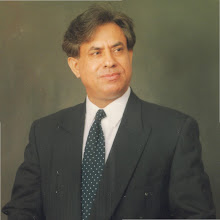

A Distinct Candle is Extinguished!
-
“I am announcing, with a heavy heart, the sudden demise of my beloved
father, Asif Javed Mir, due to heart failure on 18th December,2013. I
request to ever...
12 years ago

 Posts
Posts


