The world of today is barely recognizable when compared with the world, which faced our parents when Pakistan was created. And it is a radically different world to the one that challenged our grandparents' generation when they were young adults. Of course, change has always been with us, but the difference today is that the pace of global change is quickening.
Globalization is shaping and reshaping today's world and the world of tomorrow - your world - in extraordinary and far-reaching ways.
The defining feature of globalization is that firms, social networks, political structures and information flows are increasingly being organized along trans-boundary lines with the emphasis on the exercise being undertaken rather than on traditional boundaries. What globalization is teaching us then is that the greatest security we have comes from excellence, innovation and adaptability. It comes from the dynamic ability to deploy and expand our skills and talents as individuals and societies. It comes from knowing that we have the strength and resources to meet any challenges that come our way - not always by ourselves, but often with the help and support of our friends and neighbors.
The real choice for most other people in the world is the extent to which we participate in a wealth-generating process of global proportions, and harness its potential, not whether we participate. That is why the future will belong to those who embrace globalization and are willing to prepare for it. And education is the key to preparing for our shared, global future.
The world of tomorrow will require people with a genuine depth and breadth of talents - not just the formal skills found in the engineering, scientific, economic, legal, medical or other professions - vital though they are - but many other skills as well. The global information and telecommunications revolution is an excellent example of what I am talking about.
New forms of communications technology, emerging by the month, are ensuring that no corner of the world will be untouched by globalization. The notion of a purely domestic market is becoming obsolete with the spreading use of the Internet. Once a product or service is available on the Internet, it can be sold to the world at large.
Recent estimates suggest that the value of goods and services transacted on the Internet will grow from its current value. And before too long, it will be possible to access the Internet not just in English but in the user's own language.
The fast growing services sector is another dynamic part of the global economy, which offers unique challenges and opportunities for tomorrow's professionals. To succeed in this demanding sector, you will need to understand and work in a range of different cultures, languages and legal and financial systems. You will need to think and act in region-wide and global terms.
That is why tomorrow's world will require people who are willing to embrace the world around them and all that it offers. It will require people who can shape global and regional forces to the advantage of their societies and enterprises, and not be cowered and defeated by them.
Above all, the 21st century is the century of the knowledge worker. Universities are sources of the new knowledge, which will be needed by tomorrow's leaders, and are key repositories of the wisdom and insight we have garnered to date.
If the process of global enrichment is to continue unabated, universities and other applied institutions will need to drive the development of global knowledge workers. Pakistan needs to make a strong policy commitment to promoting education, not just for Pakistanis but also for people from throughout the Asia, Africa and beyond, in preparation for the new era.
I know that the new skills and insights people have gained will help them build their own futures with pride, and the futures of our countries with equal pride. But the vital contribution people make to the success and stability of Pakistan will do more than enhance the lives of their friends and families. It will lay the foundations for the well-being and security of people throughout the Asia.
I believe that Pakistan needs to do something to recognize this important link between knowledge and the development of better and more effective relations between countries. We need to harness the intellectual `horse power' of the Pakistan’s university system. We need to place this unique educational asset in the service of our national interests more systematically and productively.
Pakistan has a proud history of educating people. Today we are confronted with the challenge of preparing the worthy custodians of that tradition.
According to UNESCO's global estimate, 1.35 million tertiary students study outside their home countries. And Pakistan hosts a number not worth considering of these students on a per capita basis than other Asian countries. This is a clear indication not just of the quality of our institutions but of the little primacy we attach to education and particularly our national identity established by the West after the 9/11. Lucklessly this identity has been tarnished mostly by the power that considers Pakistan as the major ally in its war against terrorism. Pakistan must do something to scratch out this image.
Pakistan has great institutions with remarkable traditions of excellence in higher learning and personal development. Nobel Laureate Dr Abdul Salam symbolizes this tradition.
A successful global future requires a global education, and it requires deep respect for the cultures, values and experiences of others. It also requires advanced studies in reading the futures, upcoming trends and above all corporate and administrative creativity. They need to tailor courses for our future policy planners to study creativity and innovation.
Being a developing country Pakistan’s industry is emerging and in a buildup stage. Hence informed decision-making in investment is significantly needed. It should use commercial intelligence as a tool to have a nodding acquaintance with future trends and sneak out of stereotyped and monotonous thinking. Asif J. Mir, Organizational Transformation


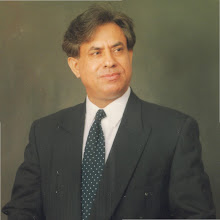

A Distinct Candle is Extinguished!
-
“I am announcing, with a heavy heart, the sudden demise of my beloved
father, Asif Javed Mir, due to heart failure on 18th December,2013. I
request to ever...
12 years ago

 Posts
Posts


