The urbanization of poverty is being propelled by a tremendous increase in the transnational movement of people and capital. The rapid transfer of money and jobs to cities and countries where cheap labor can be found has fueled by a race to the bottom. For the urban poor who are impacted by this race, there are no winners, and the losers will most likely find themselves among the projected two billion people who will be living in slums by 2030.
Hardest hit by globalization are women and children - the most vulnerable of urban dwellers. Poor women are becoming increasingly marginalized as the feminization of poverty manifests itself in many parts of the world.
The positive aspects of globalization, including greater longevity, increased literacy, lower infant mortality and wider access to infrastructure and social services, mask the unfortunate truth that these benefits are not being shared equally. The effects of globalization on cities – both positive and negative – need to be better understood if public policy is to be effective in bettering the lives of those who live in them.
Under globalization, manufacturing activities in cities have been relocated offshore to the developing economies whose lower labor costs, lower taxes and less rigorous environmental protection enable higher profits. The socio-economic consequences of globalization weaken access to basic infrastructure and housing, fuel the creation and expansion of slums, and reinforce the negative environmental and health impacts affecting the urban poor in many cities.
Demographic shifts, including transnational migration and poor integration of ethnic and racial groups, add impetus to these changes. So, too, does the ability (or not) of households and individual people to cope with rapid economic change. Those on the losing end of these changes can easily find themselves confronted with the loss of jobs, and the consequent sale of assets in order to survive, converting them into the new poor, leaving them even more insecure and vulnerable in the face of economic change.
The last two decades have witnessed a transformation of the global economy, which has led to vast economic, social and political realignments in many countries and cities. The trend towards open markets has enriched some countries and cities tremendously, while others have suffered greatly. World trade in this period has grown from about US$580 billion in 1980 to US$6.3 trillion in 2004—11-fold increase. Flows of capital, labor, technology and information have also increased tremendously.
Among the losers in this race are female workers, whose wage levels and working conditions have declined as a result of the dropping of barriers to footloose industries. This same dynamic is evident inside individual cities as well, leaving many people unable to obtain stable jobs and incomes. This leads to changes in patterns of social inclusion and exclusion across cities, often along racial and ethnic lines.
The distribution of the fruits of globalization reflects private-sector judgments about the expected financial returns to these investments, their security, and the economic and political environments in which they occur. Corporations have tended to concentrate direct investment in ten countries, including China, Brazil, Mexico, Indonesia and Thailand. In stark comparison, the poorest countries have seen no such investment.
The vacuum created by footloose industries is rarely filled by job opportunities for the poor. Rather, any new jobs tend to be in knowledge-intensive industries, many requiring university-level education.
The race also occurs within individual cities, resulting in job losses where large segments of the labor force have to shift from one sector to another. The urban poor are losing jobs and benefits and must now find other income-generating opportunities in the informal sector, which offer no security or benefits.
The loss of secure jobs with secure community roots fosters an informalization of the urban economy, with more people eking out a living in unregulated sectors. Several economic processes converge to informalize employment and other aspects of urban life. The closing of formal-sector enterprises often coincides with the downsizing of ancillary industries and services. As one industry declines – as with light engineering in Karachi - incomes in the city as a whole reduce. Former employees are no longer able to purchase services on the street; hence, street vendors also suffer. Simultaneously, if utility tariffs increase, other enterprises suffer and are forced to reduce their operations or close altogether.
Globalization has set cities against each other in a desperate competition for a share of highly mobile capital and trade. The needs and desires of global capital must be balanced with policies based on the needs of the region’s own inhabitants. Otherwise, any effort to alleviate urban poverty will expire, as meaningless gestures that provide little more than temporary relief – and the gap between rich and poor will continue to grow larger.
Jobs, consumption patterns and opportunities for social mobility are all easily influenced by external factors. This instability can be manifested in both national and local contexts through at least four important channels: patterns of investment, labor markets, prices and public expenditures. Moreover, they occur in different locations within the city, creating patchworks of decay, renewal, and economic revitalization. The challenge for national and local authorities is to identify which kinds of changes are occurring, or better still, which types of changes can be anticipated, in order to consider whether there are measures that can cushion or mitigate these impacts. To do that, changes must be anticipated and capital set aside to deal with them.
While government may feel its budget is severely constrained, it needs to apply discipline to save some of their resources for these future needs. This does not mean borrowing and thereby passing on debts to future generations. It means saving for the future. In reality, this saving is an insurance policy against future unknowns. Having such resources at hand allows decision-makers to face the future more confidently and to smooth out the impacts of volatile changes in the global economy at large. (www.asifjmir.com)


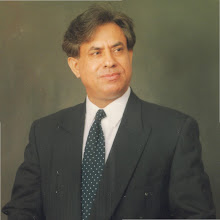

A Distinct Candle is Extinguished!
-
“I am announcing, with a heavy heart, the sudden demise of my beloved
father, Asif Javed Mir, due to heart failure on 18th December,2013. I
request to ever...
12 years ago

 Posts
Posts


