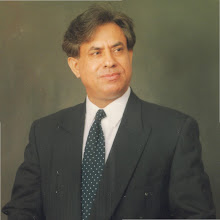
Rolling out the Red Carpet

I welcome you to my blog and hope that you will like the tour. Please leave your footmarks with comments and feedback. This will through and through enhance my knowledge and profundity of thought. Enjoy! Asif J. Mir
Showing posts with label corruption. Show all posts

Tuesday, November 25, 2008

Perishing from Earth

As in the experience of all other civilizations it can be with us if we do not recognize the principles for survival. If we failed to learn from history and recognize the future trends we will eventually go back into darkness from whence we came, and we the people will perish from the earth.

If you retrace your thoughts back to where there were those old civilizations, some five or six thousand years ago, the Egyptians, you will find that they were very intelligent, highly advanced but through corruption, selfishness, prejudice and moral degradation went into the debris of ancient history. We, in this advanced civilization, are representing similar predilections, can also follow the same destiny and go back into the dark-age from whence we came.

Egyptian civilization has been forgotten. It went down, not just mentally, scientifically, intellectually, but also physically, to let us see and know that those who go down mentally and do not alter their ways also go down physically.

After the Independence, we lost our vision, transformed into one of the corrupt nations worldwide, all the nasty crimes once akin to the West are now dominating our national life, and last but not the least each individual of Pakistan seems to be on the looting binge. Instead of contributing our role in nation building, we started pillaging our own land. When we are nurturing the same traits that caused extinction of Egyptian Civilization, why then our destiny would be any different?

The societies that sustain physically, mentally, and otherwise are those which undergo a series of divergences in development, much like the branching of a tree. The dynamic people are those who are responsive to issues, essentially open, fast paced, balanced, and tend to survive and prosper on a fairly reliable basis. Problems come to them, but they usually manage to work them out.

The struggling society of Pakistan, contrarily, outdoes the people in narrow areas of endeavor from time to time, and becoming more retarded in overall development as time goes by.

Outwardly, we are a developing society. But like a muscular athlete with a terminal cancer, a disease is eating away at us from the inside. A well-balanced nation cannot be destroyed from the outside until it falls first from the inside.

No matter how well we might arm ourselves against enemies outside our borders, we need to primarily identify the more detrimental enemy. And this greatest enemy is none else but us, who place destructive devices inside our destructive minds, causing us to morally implode, like an imploding building.

Ever since independence in 1947, we have experienced a complete abandonment of our sense of good and evil. The true crisis of our time has nothing to do with monetary troubles, unemployment, or terrorism. The true crisis has to do with the fact that we have lost our way.

If you drop a frog into a pot of boiling water, the frog will immediately jump out. But if you place the frog in a pot of lukewarm water and slowly turn up the heat, the relaxed frog will just swim around, growing accustomed to the increasing warmth until it eventually boils to death. This is what is happening to us and our cultural decay. It is a gradual process that slowly dulls our senses until what was once seen as unacceptable somehow becomes acceptable.

After the death of Quaid-e-Azam, we have allowed corruption to creep into our society as a way of life. Thus, we have become desensitized to corruption and our moral judgment is impaired. Even worse, at each step along the way, we eliminated Islamic injunctions from our lives and culture.

What will remain of civilization and history if the accumulated influence of Islam, both direct and indirect, is eradicated from literature, art, practical dealings, moral standards, and creativeness in the different activities of mind and spirit?

Consequently, a flood of immorality, corruption and violence has entered into our national life, and we have unfortunately been recognized as a culture of death from the womb to the streets. Many of our young people have no concept of the true spirit of Islam and are connoting falsely to satisfy their political agendas. Hence, many are tragically engaged in dying or killing the innocents. A sense of hopelessness prevails, a feeling of fear surrounds.

We have forgotten our true nature, divinity, because scientifically it cannot be proved! We are ignorant of true purpose of life. Values like solidarity, natural love, forbearance, compassion, generosity, and altruism do not find any place independent of an 'individual'.

The culture shows signs of degeneration into lawlessness, disease, and want on one hand, and affluence and sense gratification of wanton degree on the other. With this decline in cultural values, ethical values are also eroded. Not one particular field is afflicted with this 'virus of corruption'; all departments of human interaction show the same trend. It is difficult to find an isolated island of purity in the sea of corruption all around.

Ethics is the reflection of cultural health of the society. In course of evolution of human societies, man creates progressive cultural and moral ethos. But then a stage comes when cultural growth slows down for want of fresh ideas. Consequently ethics also remain a mere shadow of its own previous glory. However, when matter is worshiped as supreme and privileges are sought after, ethical decline is not a surprise. The remedy lies in adding spiritual dimension to existing culture and in course evolving a new moral and ethical code for coming generations. Time is still not gone. We can learn lessons from Egyptian civilization or else face extinction. Choice is only ours. (www.asifjmir.com)

Wednesday, November 19, 2008

Desperate need for apt policy planning

The stump oratory must have reached people about sharpshooter or inept public managers’ actions, GDP growth rate is declining; foreign exchange reserves are depleting fast, record downfall in exports and of foreign investment. Ipso facto, no previous government in past decades confronted issues like these when financial stability has become a forgotten song, it has miserably. Yes, the government has completely failed in efficient service delivery to the poor. Consequently, it has contributed sweet nothing in reducing poverty and hunger that goes on to sustain stark national inequalities in wealth, assets, incomes and opportunities.

The Asian Development Bank estimates that 40 million people in Pakistan live below the poverty line. In its stated bid to ensure national security, Pakistan is spending more on arms and defense, and less on social security and protection, public distribution systems and welfare programs.

In the direst situations suicide rates among the poor are on the rise. Ironically, while national level defaulters on debt benefit from enhanced facilities to restructure debt and continue borrowing, the overwhelming burden of national debt is borne by the poor.

Lacking job opportunities in rural areas cause migration to urban cities. This takes the form of low quality jobs in the informal economy, or in the case of women and girls, prostitution or domestic service. Migration under conditions of economic stress exacerbates food insecurity. Owing to weak economic and social profile of the country, the adult population could not be gainfully employed, resulting in an 8.3 per cent current unemployment rate (more than 10 per cent in urban areas), plus substantial under-employment. Today, of the current workforce of some 48.40 million- as many as 8 million- are unemployed.

More and more workers, especially women, are being forced from the relatively protected formal sector to the unprotected informal sector. This is accompanied by concentration of assets and resources in the hands of the rich and newly prosperous, who have been able to take advantage of the economic opportunities offered by modernization and globalization.

Graft and corruption in government are a significant cause of continuing poverty and hunger. Despite NAB being there, corruption is on the increase and being accentuated by the companies of the developed countries through their underhand dealings with the national officials.

Sitting in luxurious offices the economic managers of Pakistan juggle with statistics rather than conducting surveys. This is often done to draw statistics acceptable to donors or financial institutions. To duck the WB in 2001, for instance, it drafted the poverty reduction strategy, just about the time when the WB initiated a new line of credit (PRGF) for countries that were equipped with such a strategy.

The increase in the tax-GDP ratio is apparently marginal but in the numerical terms, bulk of the burden has been shifted from direct to the indirect taxes and the share of the regressive sales tax being recovered at the highest rate over the globe has sharply gone up. It is affecting the whole population. The sales tax formed over 44 per cent of the total tax collection during the fiscal 2002-03. The result is that quantum of sales tax has grown from 27.11 in 1998-99 to 42.33 per cent during July 2004-January, 2005.

The Oil Companies' Advisory Committee fixes the prices of various products on fortnightly basis. It is claimed that the committee fixes the prices in a very transparent manner keeping in view the international prices. But the transparent formula was never made public either by the government or the committee. Oil companies have thus been licensed to plunder the poor.

Pakistan currently has about 74 percent of the population living on $1 per day and 86 percent living on $2 per day, implying that one out of every three households going to sleep hungry every day.

The narrow focus on economic growth has not only failed to eliminate poverty, it has also resulted in policies that have created new forms of, or aggravated existing conditions of poverty and hunger. Shaukat Aziz institutionalized policies that opened up economy and shrunk government’s direct responsibility for redistribution of assets and benefits. Public support and subsidies were systematically torn down, and market based price systems were made the primary determinant of allocation and distribution. With privatization and withdrawal of government subsidies for domestic industry, a significant proportion of the work force was shunted into the informal sector. By and large, previous government achieved economic growth at the cost of well being of workers, small-scale agricultural producers and consumers. The greatest beneficiaries of PM Shaukat Aziz’ adjustment programs were the rich, large private producers, distributors, traders, and MNCs.

Poverty and hunger are violations of human rights. They result in exclusion and feelings of hopelessness and helplessness. The human rights of people to housing, water, and sanitation—guaranteed under international law and commitments of development targets made at global summits, including the Millennium Summit and the World Summit on Sustainable Development—drag on to erode. By ratifying a number of international human rights instruments, such as, the International Covenant on Economic, Social and Cultural Rights, Pakistan has voluntarily accepted the obligations to progressively realize human rights to food, health, adequate housing, water and sanitation, which are essential for the well being of its citizens.

Pakistan needs policies that protect the rights of people to water, land, forests, other natural resources, biodiversity and indigenous knowledge. Policies are also needed that ensure people’s access to a services essential to their development especially among the poor and historically marginalized, this includes education, social security, healthcare and information, etc. Access must be equitable and the quality of services must not vary according to socio-economic or gender backgrounds. (www.asifjmir.com)