Abstract
The ultimate spiritual basis of all life, as conceived by Islam, is eternal and reveals itself in variety and change. Without freedom and democracy ijtihad cannot be performed. Democracy is the key to opening up ijtihad—the key to solving the principal problems confronting the Muslim world today. That is the thesis of this paper. It discusses ijtihad and its role in addressing the contemporary needs of Muslim societies. My paper also explicates the way ijtihad works, and how can it be used to address the needs of Muslim societies in the twenty-first century. It brings into question: Who has the right to perform ijtihad, and how should Islam adapt to changing societal conditions, needs, and priorities in its quest for social justice and equality?
This paper also converges on the needed solutions to the prevailing crisis and development of modern Muslim societies and reconciling their understanding of Islam and the message of the Quran with changing needs, circumstances, and priorities in Muslim societies.
Permanence and Change
Perpetual change, adjustment, and movement-inevitable aspects of human society-have been recognized by every succeeding generation, as it marks its losses and gains.
Yet, at any given time, there is a local sense of continuity. But every culture, of course, experiences both continuity and change: over the longest term, these changes may be so radical that they amount to a new cultural or socio-economic form, but in the shorter term they are more often a change of content, not of form.
Whereas the basic principles that govern economy and society may stay the same, many of the devices, rules, and customs that mediate between these principles, on the one hand, and material production, on the other, are constantly developing.
Any loyalty to a social system makes sense only when we recognize the existence and importance of deep feelings of continuity, which are perhaps the very essence of a sense of culture.
In order to find reconciliation between stability and change, Islamic society finds eternal principles to regulate its collective life; for the eternal gives us a foothold in the world of perpetual change.
Change is inevitable in human life and society. Dr Muhammad Iqbal, recognized as the Poet of the East, also says that it is only revolution, which is permanent and everything else keeps on changing. In the event of constant change, can religion and religious law remain unchanged? Again the important question is what is permanent in religion? Is there any component, which changes? Does divine mean something static? Then what is the meaning of the Quranic verse ...every day He manifests Himself in yet another (wondrous) way (29:55).
Ijtihad
However since eternal principles can also be debilitating if they are understood as excluding all change, the dynamism of ijtihad is necessary. Ijtihad keeps its body and soul together with the principle derived from Quran: Nor should the believers all go forth together: If a contingent from every expedition remained behind. They could devote themselves to studies in religion, and admonish the people when they return to them—that thus they (may learn) to guard themselves (against evil). (9:122)
The science of ijtihad (or reasoning and interpretation) was developed by Muslim scholars in order to understand and apply the message of the Quran to varying societal needs and conditions. This process is based not only on the Quran and religious tradition (sunna), but also on reason, and prioritization.
Ijtihad has the meaning of being an authority in the matters of Islam; but there are two ways of being an authority and deriving opinions in the matters of Islam: one which is in accordance with the shari`a, and one which is forbidden by it.
Now, the kind of ijtihad which, in my opinion, is forbidden is that which means legislating or enacting the law, by which we mean that the mujtahid passes a judgment which is not in the Quran or the Sunna but according to his own thought and his own opinion. The sources of legislation, and the valid proofs for determining the shar`ia, are given as the Book, the Sunna and ijtihad.
The commands which are given in the shari`a from the Book and the Sunna are limited and finite, whereas circumstances and events which occur are not, so another source in addition to the Book and the Sunna must be appointed for the legislation of Divine commands - and that source is the very same as we have defined as ijtihad alra'y.
Ijtihad gradually found a wider meaning, i.e., the employment of careful consideration and reasoning in reaching an understanding of the valid proofs of the shari`a. This, of course needs a series of sciences as a suitable preliminary basis on which to develop the ability to consider and reason correctly and systematically. The `ulama of Islam gradually realized that the deduction and derivation of the precepts from the combined valid proofs of the shari`a necessitated the learning of a series of preparatory sciences and studies such as the sciences of literature, logic, the Quranic sciences and tafsir (Quranic exegesis), the science of hadith and the narrators of hadith (rijal alhadith), the science of the methodology of usul alfiqh, and even a knowledge of the fiqh of the other sects of Islam. A mujtahid was someone who was a master of all these sciences.
Ijtihad as used today means competence and expert technical knowledge. It is obvious that someone who wants to refer to the Quran and hadith must know how to explain the meaning of the Quran, he must know the meaning of the verses, which verses abrogate which verses, which ones have clear meanings and which ones ambiguous meanings - and he must be able to distinguish which hadith is valid and authoritative and which not. In addition, he must understand, on the basis of correct rational principles, incompatibilities between hadiths to the extent that it is possible for him to resolve them. In the verses of the Quran themselves, and similarly in the hadith, a series of general principles for verification and interpretation are laid down, and the use and exercise of these principles need training and practice, just as in the case of all other basic principles in every science. Like the skilled technician who knows which material to choose from all the materials available to him, the mujtahid must have proficiency and ability. In hadith, especially, there is a great deal of fabrication, the true and the false are mixed together; the expert must have the power to distinguish between them. In short, he must have enough preliminary knowledge so that he can exercise competence, authority and technical expertise.
Every day Muslims are faced with new problems in their lives, and they do not know how to confront them as Muslims. Basically, the 'secret' of ijtihad lies in applying general principles to new problems and changed circumstances. The real mujtahid is one who has mastered this secret, who has observed how things change, and subsequently how the rulings on them have changed.
The work of a mujtahid is the deduction and derivation of the precepts of the shari`a; but his knowledge and understanding of all things, in other words, his worldview, has a great influence on the decisions he makes. If we imagine a mujtahid who is always sitting in the corner of his house or his madrasa, and compare him with a mujtahid who is conversant with the currents of life, both of them refer back to the valid proofs of the shari`a, but each one of them will derive his legal rulings in a particular way, using a particular method.
In all the world's sciences - medicine, mathematics, law, literature and philosophy - branches of specialization have been created, and for that very reason progress has been accelerated in each of these branches. Some mujtahids also take as their specialization `ibadat (the rites of Islam), and others mu`amilat (transactions), some siyasat (politics), and other ahkam (criminal law); Thus, each mujtahid can study his own branch more thoroughly.
Many people wonder why it is that the mujtahids differ at times in their decrees, when the basis of their Ijtihad are the same. It should be observed that difference in scientific opinions is not to be taken as a sign of a substantial defect in the quest for knowledge. It is rather, a sign that knowledge moves in progressive steps towards perfection. Differences of opinions are to be found in all sciences, not just in fiqh.
A mujtahid who may sometimes make a mistake while practicing the act of deriving Islamic laws from their original sources - the Quran and the sunnah - but his mistake is not done blindly and at random but due to his insufficiency or inadequacy in his scientific tools or his self capacity which causes him to be unable in deriving legal law as it is formulated in the world of law and a divine Shari'ah.
Contrarily, an example is a case in which Imam Muhammad Ibn Idris al-Shafi'i, one of the founders of Islamic jurisprudence, gave a certain legal opinion in Baghdad. One year later he moved to Cairo, and in response to the same question he gave a very different opinion. Someone questioned him, "Oh Imam, last year in Baghdad you gave a different answer," and he replied, "That was in Baghdad and this is in Cairo. That was last year and this is now." When employing ijtihad, scholars considered the time, place, norms, and prevailing conditions when they rendered their religious advice and opinions.
Some scholars depend on some of these sources in formulating laws while others refuse to do so pointing out the drawbacks of these sources.
It is useful to point out the main principles, which serve as necessary conditions in the process of juristic reasoning (Ijtihad). Among them are the following:
1. Certainly, the Quran and sunnah are two main sources in formulating Islamic laws.
2. No one has the right to give his own Ijtihad in any case whenever there is a legal law in the Book of Allah and the Prophet's sunnah. "...And whatever the Messenger gives you accept it, and whatever he forbids you, abstain (therefrom)" (59:7)
3. Only one judgment for one subject falling under the same circumstances and conditions, and which represents the pure legal opinion.
4. The laws discovered by the faqih are only estimated but not final and should therefore be subjected to scientific discussion and strict legal scrutiny.
5. As a result of the previous point, we should understand that the process of juristic reasoning is a critical one in which discovered opinion undergoes a thorough accurate criticism, and evaluation in order to arrive at the correct law. No juristic reasoning could be considered sound if it is not subjected to criticism and scientific discussion.
6. Juristic reasoning should be pure and free from any fanaticism or internal and external factors such as political and sectarian tendencies and should be capable of withstanding scientific analysis and criticism. Therefore, Ijtihad is a scientific process based on research and inquiry.
It is also important to bear in mind the two aspects of religion, and it applied to all religions of the world, i.e. transcendental and transient. The transcendental is immutable whereas the transient as the word itself indicates is subject to change depending on the contingencies of the situation. What we understand by the Shari'ah is composed of both the elements i.e. transcendent and transient or, in other words, the divine and human. The Quran also incorporates both the elements. For example the institution of slavery is a transient one whereas the concepts of human dignity, equality and fraternity are all transcendental.
In a fast changing world recourse to ijtihad is a must and Islam is among those religions which approves of healthy change and allows its believers to not only grapple with the changes taking place around them but also to strive to reapply Islamic principles of jurisprudence.
Spiritual Democracy
Religious establishments impose restrictions on the contemporary practice of ijtihad. Nonetheless, democracy and freedom of inquiry and expression are essential to the practice of ijtihad and to the successful reconciliation of Islam and modernity.
Today's proponents of ijtihad take a far more expansive view. "There will be no Islamic democracy unless jurists permit the democratization of interpretation. Political elites in the Muslim world have for centuries restricted the development of democracy and political accountability by hiding behind religious principles that they proclaim to be fixed in stone. In effect, for an end run around the entire traditional apparatus of Muslim jurisprudence. Believers should instead look directly to the Quran and to the practices of Muhammad (pbuh) and his companions, and use their own efforts at interpretation to build ethical communities.
The reformist interest in ijtihad is not new. For more than a century, Muslim scholars and activists have cited the concept as they have tried to respond to the trauma of colonialism and its aftermath. In his 1934 book The Reconstruction of Religious Thought in Islam, poet Dr Muhammad Iqbal, argued for transferring "the power of ijtihad from individual representatives of (legal) schools to a Muslim legislative assembly," which would build toward "spiritual democracy, which is the ultimate aim of Islam."
The latest proponents celebrate a much more inclusive model of ijtihad. No jurist can single-handedly interpret Islam. Shariah should be by shura," or consultation, he says. "We should all consult among ourselves and conclude what God is telling us. ... Interpretation of God's message is the quintessential quality of humanity. To take away from me my right to interpret Islam, you have to deprive me of my humanity.
Creativity built on the belief that there were always new possibilities available and that God gave us this earth and this life with permission to use them creatively. Legal reasoning—even the best legal reasoning—is not the solution to our problems. Our problems are not going to be solved by having scholars think more deeply. If we limit change and innovation to only those who have qualifications to reason from the text, we are not going to get anywhere.
It is hoped that by the conclusion of this paper, the audience will see Islam in a new light, not as a form of religious dogma, but as a guide to making choices based on intelligence and reason. New awareness almost always creates more questions to answers than answers to questions. It is this mode of thinking that allows for scientific progress. In principle, a democratic process allows and encourages all questions and points of view, even those, which challenge the principles of democracy, although this is the ideal more often than the reality. When the ideal is the reality, the process remains dynamic. In a dogmatic regime, the process becomes static, even in a supposedly democratic regime. The truth has been declared and no other point of view will shake it or change it. Asif J. Mir, Organizational Transformation


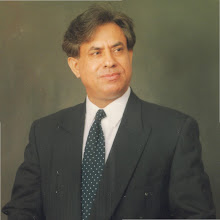

A Distinct Candle is Extinguished!
-
“I am announcing, with a heavy heart, the sudden demise of my beloved
father, Asif Javed Mir, due to heart failure on 18th December,2013. I
request to ever...
12 years ago

 Posts
Posts


