The home of most value in the future will not use technology primarily to automatically control the environment. It will help its occupants learn how to control the environment on their own.
People spend more time in their homes than in any other space. The home ideally provides a safe, comfortable environment in which to relax, communicate, learn, and be entertained. Increasingly, it is where people connect with friends and family, conduct supplementary business, manage resources, learn about the world, and maintain health and autonomy as they age. People invest extraordinary amounts of time, money, and emotional energy to mold their homes into living spaces that meet their needs.
Unfortunately, homes today are ill suited to exploiting the pervasive computing applications being developed in laboratories. Most homes do not easily accommodate even the simplest new technologies, let alone embedded sensor infrastructures and ubiquitous display technologies. Perhaps, homeowners generally believe that computer devices make life more complex and frustrating rather than easier and more relaxing. They are wary of the aesthetic, financial, and cognitive challenges of bringing new technologies into their homes.
If we are to believe most movies, television, and popular press articles that mention home life in the future, we will have complete control over our spaces at the touch of a button. In fact, our homes will be so fully automated and “smart” that we will rarely have to think about everyday tasks at all. We will spend nearly all our time in the home engaged in leisure activities because digital and robotic agents will have taken over the mundane chores of day-to-day life.
Technology will require human effort in ways that keep life as mentally and physically challenging as possible as people age. Environments shall be created that help people live long and healthy lives in their homes; reduce resource consumption and integrate learning into their everyday activity in the home
Computer technology shall be ever-present but in a more subtle way. Information will be presented to people at precisely the time and place they need it. The pervasive technologies to empower people with information will help people make decisions; they will not be stripped of their sense of control as psychologically and physically debilitating.
There will be an environment that uses pervasive computing technology to save energy by automatically controlling the heater-vent-air conditioning system. The environment’s embedded sensors will infer context such as where people are, what they are doing, and what the inside environmental conditions are. The home will contain computer-controlled appliances, windows, and blinds.
To reduce resource consumption homes will be designed that control environmental conditions. The home’s occupant will inform the system via some type of user interface that he or she wishes to stay comfortable while saving as much energy or money as possible. The home will then use a set of optimization algorithms to simultaneously maximize savings and comfort by automatically controlling the systems, windows, and blinds. For instance, on a day when the temperature is predicted to shift from warm to cool, the home might determine that the optimal cooling strategy is to shut down the AC and automatically open a set of blinds and windows so as to create an efficient cross breeze.
There appear to be many situations in which the automatic system might succeed in optimizing temperature comfort yet fail in “doing the right thing”: something noisy is occurring outside, someone is smoking outside the window, someone in the home is allergic to pollen and the pollen count is high, it is raining outside, it is too quiet for a person reading when the hum of the air conditioner is off, someone did not want the blinds open because it throws glare on a computer screen, and so on. No matter how hard the system designer tries to program contingency plans for all possible contexts, invariably the system will sometimes frustrate the home occupant and perform in unexpected and undesirable ways.
In the home of the future, the windows include a tiny light that is either embedded in the window frame (for example, a light-emitting diode) or projected on the window using display technology (for example, an IBM Everywhere Display). The home’s embedded sensors and optimization algorithms compute a strategy for cooling the home by opening a particular set of windows, but they do not proactively implement the strategy.
Imagine that the light on the window subtly illuminates. It does not interrupt the home occupant. When someone in the home notices it, he or she knows the light means “it might be a good idea to open this window right now.” The home thereby unobtrusively informs the user of actions that might be taken to conserve energy or money. In this way, the home teaches the occupant, in an unobtrusive way, how to achieve the optimal settings. The home can take a similar approach when the goal is to improve health or introduce learning into everyday life.
The labor and material cost ratio is irrational today. This will be altered in making future homes. More money shall be devoted to materials, design, engineering, safety, and technologies in the home. Borrowing from recent innovations in the automobile industry, an integrated “chassis–infill” construction system shall be developed capable of rapidly installing with minimal labor. In one integrated assembly, composite beams and columns provide structure, insulation, sensor arrays, lighting, signal and power cable raceways, and ductwork. The beams use special connectors that lock together easily. Infill sections that form the structure’s interior and exterior walls are then “snapped in” to the chassis structure without requiring skilled labor. Finally, interior finishes are snapped on to cover joints and wiring raceways.
The resulting structure will be easier to change than conventional housing, require less expensive labor during construction, allow more money to be spent on higher-quality materials and technologies, and easily accommodate sensing infrastructure and new output technologies. Asif J. Mir, Organizational Transformation


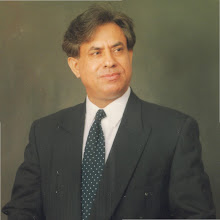

A Distinct Candle is Extinguished!
-
“I am announcing, with a heavy heart, the sudden demise of my beloved
father, Asif Javed Mir, due to heart failure on 18th December,2013. I
request to ever...
12 years ago

 Posts
Posts


