In a world of flickering screens, large and small, filmmakers will work inside and outside of the studios and television networks, bring in diverse voices to televisions, cinemas, and computers alike, tell stories ruled not by profit but by art, by conviction, and by people’s need to connect to one another and the world around them. In the same world ignoramus filmmakers of Pakistan—clueless about the modern technologies, the art and science of filmmaking together with the oddments of globalization—will drag on poking holes in technological jumps and thus demonstrating that they were powerless to draw breath in the 21st Century.
Future’s digital technology will transform the way the media is made and consumed. The moment is not far off when critical decisions will be made, in the halls of government and in the marketplace, about how digital technology will be used to create, copy, distribute, and present media in the years to come.
As digital opportunities and challenges change our landscape, one question will stand out: how will the public—and the diversity that filmmakers bring to it—benefit? Filmmakers will depend on a healthy public media ecosystem, and our shared future tied to policy that nurture or weaken that system. They will take creative risks, speak their minds, and champion the many voices that matter most but seldom heard.
For future’s media makers, the essence of digital is this: everything we do to create content can be turned into a series of ones and zeros that our naked eyes can’t decode into pictures and sounds, but that a variety of devices can.
This new digital code will change media making forever. This code will transform the four most important processes for media makers—production, replication, distribution, and presentation.
To produce media, future’s artist will be able to point a digital video camera at a tall mustachioed man scratching his ear and capture this moving image, represented inside the camera as a unique piece of digital code. The artist will manipulate that code to remove the man’s mustache and add a large and hungry dinosaur bearing down behind him (using CGI technology). The artist will then combine this new code with other pieces of code to shape a complex story of images, sound and music (using editing systems such as Avid or Final Cut Pro).
The result will be an enormous sequence of finished code: a movie, say, that will be copied an unlimited number of times, with each copy an exact replica of the original. Any of these copies will then be transmitted through the air, across wires or via a physical container (such as a CD), depending on how large the code is and how much capacity the transmitter has read at the receiving end in many different ways by a wide variety of devices—a computer, a projector, a television, a phone—that translate the code into images and sound.
The possibilities with digital technology will be nearly infinite. The realities will be much more confined. The question with digital will not be what might happen, but what filmmakers actually do with it.
The dizzying pace of digital change will, in fact, catch us all somewhat by surprise. Businesses and lawmakers will scramble to catch up with the changes wrought by this technological explosion. New business models and new policies will be built to deal with it.
Major economic stakeholders in tomorrow’s burgeoning media economy will all work hard to shape the outcome in their own interests. And much will be at stake for them all, because digital technology will challenge the traditional business models that media companies have relied on to profit financially from their work.
But they will not be the only stakeholders. There will also be public—all of us as citizens and parents and children, artists and consumers. When the dust will settle on the new digital economy and society, how will the public have benefited? Will the media policies actually promote freedom of speech and diversity of expression? Will they foster the many facets of the cultures that make up a nation?
The good news is that digital technology will make production cheaper, faster, and more manageable. It will also open up avenues for distribution, such as the Internet and, to a lesser extent, cable and satellite, while drastically reducing the costs of replicating copies of an filmmaker’s work.
And that’s also the bad news. Filmmakers will face challenges in three big areas: ownership, distribution, and funding. Specifically: (1) Ownership: How will filmmakers protect their work from unauthorized use and copying, while still having access to others’ work for legitimate use in their own creations? (2) Distribution: Will new distribution networks give filmmakers more or less access to audiences—and how will that distribution affect production? (3) Public support: How will the public resources now provided—such as spectrum allotments and public funding—change in the digital era?
In the days and age of democracy, stakeholders will assert their interests in the coming changes. Broadcasters, movie studios, technology companies, and other players will try to figure out how to make sure that the answers to these questions benefit them. They will take their issues to legislators, to the courts, and to consumers. The result will be policy.
Filmmakers will also be stakeholders—as well as artists and business people with a job to do. Digitization won’t change everything. The old standbys of good storytelling, the battles over concentrated ownership, the resistance to change by those with power, and conflicts over public support will repeat themselves in the digital age.
Digital will change the ecosystem that the filmmakers live in. The vision that filmmakers bring will be important, as stakeholders thrash out the terms under which they use digital code. Cut and dried, this future has already made an entrance in Hollywood. Asif J. Mir, Organizational Transformation


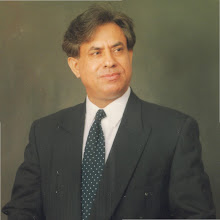

A Distinct Candle is Extinguished!
-
“I am announcing, with a heavy heart, the sudden demise of my beloved
father, Asif Javed Mir, due to heart failure on 18th December,2013. I
request to ever...
12 years ago

 Posts
Posts


