It is true to say that we live on a planet that is undergoing rapid changes due to the increases in population and industrial development. It is easy to feel environmental concerns, but they must be taken into account when considering our future.
It is now a proven fact that since the industrial revolution the amount of carbon dioxide in the atmosphere has increased significantly. As levels of this gas and other greenhouse gases also recently building up effect the way heat is distributed, it is predicted that there will be an increase in global temperature. It is certain that global population growth will continue for some considerable time to come. A larger global population will put expanding demands on global resources of food, water and energy and will accelerate climate and environmental deterioration.
The level of air pollution in Pakistan's two largest cities, Karachi and Lahore, is estimated to be 20 times higher than World Health Organization standards, and continuing to rise. The situation is depressing by reason of futile preparation and inept execution. Good and not so good regulations have never been enforced forcefully. In addition, enforcement does not imply effectiveness, and even if regulations were strictly enforced, many industries would be unable to comply. In 1996, only 3% of industries were able to pass the test for compliance.
For lacking combined effluent treatment facility, the wastewater is being allowed to flow into the nearest streams and causing pollution. The sub-soil waters of textile centers are highly saline and as such are unsuitable for producing high quality finished textile products. The saline or brackish sub-soil water is unfit for human consumption and also unsuitable for most of the industrial uses.
Air pollution has also become a major problem in most cities. There are no controls on vehicular emissions, which account for 90 percent of pollutants. The average Pakistani vehicle emits twenty-five times as much carbon monoxide, twenty times as many hydrocarbons, and more than three and one-half times as much nitrous oxide in grams per kilometer as the average vehicle in the United States.
Pakistan’s Perspective Plan (1988-2003) and previous five-year plans do not mention sustainable development strategies. There have also been no overarching policies focused on sustainable development and conservation. All our programs focus on reaching self-reliance in food production, meeting energy demands, and containing the high rate of population growth. Sorry to say, no priority has been accorded for curtailing pollution or other environmental hazards.
Consequently, deforestation has contributed directly to the severity of the flooding problem faced by the nation in the early 1990s. No solution has been found for the solid and liquid excreta that are the major source of water pollution in the country and the cause of widespread waterborne diseases. Because only just over half of urban residents have access to sanitation, the remaining urban excreta continue to be deposited in farms or on roadsides, into waterways, or incorporated into solid waste. Thus the vegetables grown from such wastewater have serious bacteriological contamination. Gastroenteritis, widely considered in medical circles to be the leading cause of death in Pakistan, is transmitted through waterborne pollutants.
Transportation contributes to four of the six criteria pollutants: ozone, carbon monoxide, particulate matter, and nitrogen dioxide. Pakistan’s transportation planning (if it all there is any) must take into account the impacts on both the natural and human environments. Transportation projects should closely see how they might impact the community, the natural environment, and our health and welfare.
In crowded streets filled with buses, trucks, automobiles, and motorcycles, often honk senselessly. Traffic noise should be reduced through a program of shared responsibility. Thus, provincial and local governments should practice compatible land use planning and control in the vicinity of roads. Local governments should use their power to regulate land development in such a way that noise-sensitive land uses are either prohibited from being located adjacent to a road, or that the developments are planned, designed, and constructed in such a way that noise impacts are minimized.
The EPA should also promote bicycle and pedestrian transportation accessibility, use, and safety. A long-range plan is needed to provide the development and integrated management and operation of transportation systems and facilities, including pedestrian walkways and bicycle transportation facilities.
Protecting public health, as well as preserving Pakistan's natural wonders, has made environmental protection increasingly important. Environmental issues attach more significance because under provisions of a World Trade Organization (WTO) agreement, Pakistan will have difficulty after 2005 exporting products from industries without adequate environmental safeguards.
Because Pakistan, along with other developing countries, has argued that it needs to be free of emission ceilings in order to develop its economy, the country has not taken on any emission reduction commitments under the United Nations Framework Convention on Climate Change, nor is Pakistan a signatory to the Kyoto Protocol.
There are many things we can do to help reduce damage to our local, and therefore global, environment. An obvious one is attempting to reduce unnecessary consumption of products and power. Good insulation, lower heating thermostat settings, turning off appliances, solar heating and so on, as well as sensible use of water could be considered. Care can be taken to try to purchase goods which use less packaging waste and if possible less transportation. Where meat eaters should of course be concerned about animal welfare, vegetarians should be careful about the total amount of energy used in the production and transport of their food, which in some cases can threaten the effective environmental benefit of such a lifestyle.
The only course of action for us must surely be to make our individual effort to care for our world and encourage others, especially the young, to do the same. By working together at a local, national and international level it should be possible for our Mother-earth to have a viable future. www.asifjmir.com Organizational Transformation


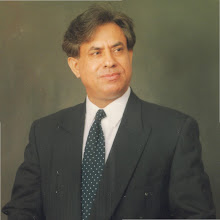

A Distinct Candle is Extinguished!
-
“I am announcing, with a heavy heart, the sudden demise of my beloved
father, Asif Javed Mir, due to heart failure on 18th December,2013. I
request to ever...
12 years ago

 Posts
Posts


