Rolling out the Red Carpet

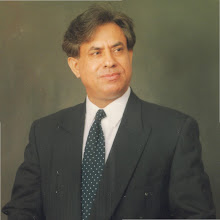
I welcome you to my blog and hope that you will like the tour. Please leave your footmarks with comments and feedback. This will through and through enhance my knowledge and profundity of thought. Enjoy! Asif J. Mir
Showing posts with label human rights. Show all posts

Monday, January 19, 2009

Making a Dead Set at Corruption

Corruption is an insidious plague that has a wide range of corrosive effects on society. It undermines democracy and the rule of law, leads to violations of human rights, distorts markets, erodes quality of life, and allows organized crime, terrorism and other threats to human society to flourish. As defined by Transparency International: “Corruption is the abuse of entrusted power for private gain.” According to Kofi Annan, “Corruption hurts the poor disproportionately—by diverting funds intended for development, undermining a government’s ability to provide basic services, feeding inequality and injustice, and discouraging foreign investment and aid.”

The good news is that future of corruption is not so bright it will not entirely finish though.

No country is entirely free of corruption. Efforts to fight corruption encourage transparency and accountability, thanks to an increased understanding of corruption's social and economic costs. There is the need for expanding the econometric framework, as well as to more general future research directions and policy implications in the field of governance.

Corruption is principally a governance issue, a failure of institutions and a lack of capacity to manage society by means of a framework of social, judicial, political and economic checks and balances. Good governance and globalization (at both the country as well as at the city level) do matter for performance in terms of access and quality of delivery of infrastructure services.

Corruption is deeply embedded in the political culture and poverty of Pakistan. Regulatory bodies are particularly vulnerable to corruption as they have the power to make key decisions on profit-making activities. Corrupt regulatory bodies can thus dangerously impede economic development.

Discretion creates more opportunities for corruption than where regulatory requirements are laid out through clear, precise and formal rules. Debate about corruption tends to focus almost exclusively on the receivers of corruption, rather than the purveyors. Corruption is alive and well and living in myriads of places. Bribery is simply the way business is done in Pakistan.

Within Pakistan's political dynamics, corruption figures as a very critical element. Prevalence of corruption in various political regimes has been the main cause of their downfall. The incumbents have placed accountability and the anti-corruption drive very high on its agenda in form of NAB its operational approach is rather controversial.

Corruption increases the number of capital projects undertaken and tends to enlarge their size and complexity. The result is that, paradoxically, some public investment can end up reducing a country’s growth because, even though the share of public investment in gross domestic product (the total of all goods and services produced in a country in a given year) may have risen, the average productivity of that investment is dropped.

For a private enterprise, getting a contract to execute a project, especially a large one, can be very profitable. Therefore, managers of these enterprises may be willing to offer commission to politicians who help them win the contract. Conversely, in many cases the act of bribery may not start with the enterprise but with the officials who control the decisions. It is apparently impossible to win a government contract in Pakistan without first paying a bribe. Interestingly, the laws of certain major industrial countries regard commissions paid by domestic enterprises to foreign politicians as not only legal but also tax deductible.

In some of these phases, a strategically placed high-level official or elected leader can manipulate the process to select a particular project. He can also tailor the specifications of the design to favor a given enterprise by, for example, providing inside information to that enterprise at the time of issuance of tender.

The enterprise that pays the commission rarely suffers from the payment of the bribe, since it is fairly simple to recover that cost. First, if corrupt officials of winning the bidding competition assure it, the enterprise can include the cost of the commission in its bid. Second, it can reach an understanding with the influential official that the initial low bid can be adjusted upward along the way, presumably to reflect modifications to the basic design. Third, it can reduce its spending on the project by the amount of the bribe by skimping on the quality of the work performed and the materials used. Fourth, if the contract is stipulated in a cost-plus fashion, the enterprise can recover the cost of the commission by overpricing.

The first step towards tackling corruption is preventing it. In attempting to prevent the laundering of proceeds of corruption mechanisms need to set up to review suspicious transactions, and analyze financial information.

Transparency and accountability in matters of public finance must also be promoted, and specific requirements established for the prevention of corruption, in particularly critical areas of the public sector, such as public procurement.

Citizens have the right to expect a high standard of conduct from their public servants. They also have to participate in preventing public corruption. For these reasons there is a need to actively encourage and promote the involvement of non-governmental and community based organizations, as well as, other elements of civil society, and to raise public awareness of corruption and what can be done about it.

There is a requirement for the prevention of corruption in the judiciary. Decision-making should be entrusted to committees rather than individuals. Although this adds to the cost of regulation, it may eventually save money by facilitating mutual monitoring and accountability.

New attitudes, better financial systems, prosecution of the guilty, better management of diamonds and real accountability to the people … this is the agenda for change. In taking it forward, the leading role must obviously be taken by the people and Government. But tackling corruption effectively requires a real focus, coordinated action and shared responsibility. Everyone’s energies must be thrown behind this anti-corruption strategy. It is the key to a better future for the people of Pakistan. (www.asifjmir.com)

Wednesday, January 14, 2009

"We the people . . . . ."

From the lost Constitution of 1973 to its current structure, all incumbents have been cutting holes with amendments to fortify their power. No effort has ever been made to consolidate the power of people. Never has there been any attempt to include the parts that protect consumer rights. Thus and so, the Constitution of Pakistan does not guard the consumer rights of the citizens of Pakistan. Implicitly, first come the rights of the citizens, and then comes the Constitution. If a constitution contains adequate procedures to protect rights, it can be legitimate even if it was not consented to by everyone; and one that lacks adequate procedures to protect human rights is unfair even if it was consented to by a majority.

Future is on our head with the concept of globalization that is changing the focus of governance. Instead of territory, human rights are now getting significance. And consumer rights happen to be the component of larger human rights program.

Consumer means people. By barely defining consumers as customers, we bar millions of citizens who due to lacking resources can’t buy. So consumers are citizens. Moreover, everybody has to consume to survive—consumption is a natural process for human survival. Thus, everyone is a consumer by default.

Consumers are the largest economic group in any country’s economy, affecting and affected by almost every public and private economic decision. But they are also the only important group that is not effectively organized, whose views are not heard. Therefore, the Government, the highest spokesman for all people, has a special obligation to the consumer’s needs.

The consumer rights have a universal significance as they symbolize the aspirations of the poor and disadvantaged. On this basis, the United Nations, in April 1985, adopted its Guidelines for Consumer Protection. They include: 1) the protection of consumers from hazards to their health and safety; 2) the promotion and protection of the economic interests of consumers; 3) access of consumers to adequate information to enable them to make informed choices according to individual wishes and needs; 4) consumer education on the environmental, social and economic impacts of consumer choice; 5) availability of effective consumer redress; and 6) freedom to form consumer and other relevant groups and the opportunity to present their views in decision-making processes affecting them.

No legislator, no political scientist, no intellectual, and no so-called constitutional expert ever provided a new, realistic and philosophically rigorous theory of constitutional legitimacy that justifies both translating the Constitution according to the needs of people and, where that need is vague or open-ended, construing it so as to better protect the rights of the people. Consequently, even the general principles defined by the UN could not be realized.

The consumer protection issues are seldom included in the agendas of utility service providers, most of which are in public sector. Consequently, the rights of poor Pakistanis are being trampled even by public sector organizations like WAPDA, Sui Gas, and PTCL, to mention a few. Little attention is given to consumer protection policies, and consumer friendly market structures, incentive regulation, tariff regimes, deregulation and competition.

Consumer issues can be chronicled even before partition under the colonial rule that established monopoly regimes, when consumers had no voice at all. Same structure was adopted after independence and it continues on and on disregarding the advent of competition, which has given rise to greater concern about consumer welfare. Hence the consumers in Pakistan today feel that they remain to be excluded from the decision-making process. They believe that they are still far off from the regulatory process that provides them no opportunity to influence or even overturn critical decisions. And so consumer perceptions and opinions about the marketplace scenario are depressing.

In Pakistan lack of choice among alternative service providers due to a single or dominant operator is making consumers vulnerable. They have no right, whatsoever, for intervention where dominant operators are protected by the government, where there is no quality of service performance requirements and where dominant operators are authorized to set tariffs without rationale and beyond reach of the majority.

An informed consumer is an empowered consumer. Regulators should make every effort to empower consumers. Specific educational mass-media campaigns are needed to educate consumers about their rights. School textbooks are another useful but neglected channel to educate consumers about their rights. Education is a powerful, albeit, long-term action to shape people’s attitudes about enforcing their rights as consumers.

Activities that regulators should consider in setting up the consumer agenda include: establishing customer services, creating mass awareness of consumer rights, enforcing those rights, creating nationwide offices to address consumer issues and offering dispute resolution systems.

India is getting a global reputation for the rapid development of its consumer movement. Today that is perhaps the only country in the world, which has exclusive courts for consumer redressal of grievances that too within 90 to 150 days. One of the greatest achievements of the Indian consumer movement is the enactment of the dynamic consumer law in 1986: COPRA. Coming 39 years after Independence, it has acknowledged the rampant consumer abuses, including those of the government owned public utilities like telephones, transport, power etc.

Pakistan does not have a cohesive national consumer policy. Neither it has a national consumer protection law. The Federal List in the Constitution does not include the issue of consumer protection. Perceptibly, the provinces also don’t have consumer protection laws. The federal capital promulgated a consumer protection law in 1995 but was never implemented. Since the State has not provided any protection mechanism that consumers could use to protect them, hence they feel very helpless. Controversial amendments or litigious issues aside, our legislators ought to think about people and at least give a national consumer protection law. (Click Asif J. Mir to view his professional profile)