How can we best prepare students to succeed in the 21st century? This is a question that should be of paramount importance to Pakistan’s educators, employers, parents and the public. Alas, this is nobody’s priority.
The accelerating technological change, rapidly accommodating knowledge, increasing global competition and rising force capabilities around the world, make 21st century skills essential. There is a forceful need for a calling on schools to change dramatically.
Today’s education system faces irrelevance unless we bridge the gap between how students live and how they learn. Schools are not even struggling to keep pace with the astonishing rate of change in students’ lives outside of school. Neglecting the fact that students will spend their adult lives in a multitasking, multifaceted, technology-driven, diverse, vibrant world, they are not equipping them to do so. They are seldom committing to ensuring that all students have equal access to this new technological world, regardless of their economic background.
We know more today than ever about how students learn. Our researchers and educators are not making the grades on mapping the remarkable territory of the human mind. They lack scientific insights that can inform educators about the cognitive processes of learning, effective teaching strategies for engaging students in learning and motivating students to achieve. We must incorporate understanding into classroom teaching and learning on a broad scale for preparing our future.
Educators in other countries have focused on improving student achievement—the perennial top priority of their public concern. They have established rigorous academic standards, assessments and accountability measures—a concerted effort that has involved educators, employers and community members. Schools in the West are responding with strategies to improve teaching and learning. They are now closing a gap between knowledge and skills most students learn in school and the knowledge and skills they need in typical 21st century. They are thus encouraging development of curriculum and assessments that reflect 21st century realities.
Literacy in the 21st century means more than basic reading, writing and computing skills. It means knowing how to use knowledge and skills in the context of modern life.
The nation needs a compelling vision for education capable of inspiring leaders, teachers, parents and students alike. Clearly we must work together to help schools fully address the educational needs of the 21st century.
A broad-based public-private partnership needs to be forged contributing to improving education in several distinct ways. It should synthesize research, insights and best practices about 21st century knowledge and skills into a powerful vision and sharing this information broadly. It should also define a framework and create a common language for understanding and promoting 21st century skills. The education leaders should be provided with tools, examples and a strategy for action, not rhetoric. It should also build consensus in the public and private sectors about the nature and need for 21st century skills.
We need to increase emphasis on the additional knowledge and skills students need for the 21st century. This is an opportune time to align standards, assessments and accountability measures with 21st century skills.
We can build momentum with following flight of stairs: 1) Embrace a powerful vision of public education that includes 21st century skills. 2) Align leadership, management and resources with educational goals. 3) Use this tool to assess where schools are now. 4) Develop priorities for 21st century skills. 5) Make sure students have equitable access to a 21st century education. 6) Begin developing assessments to measure student progress in 21st century skills. 7) Collaborate with outside partners. 8) Plan collectively and strategically for the future.
There are also some key elements for fostering 21st century learning. Emphasize must be laid on core subjects. Knowledge and skills for the 21st century must be built on core subjects that are mathematics, science, languages, civics, government, economics, arts, history and geography. The focus on core subjects must expand beyond basic competency to the understanding of core academic content at much higher levels.
As much as students need knowledge in core subjects, they also need to know how to keep learning continually throughout their lives. Learning skills comprise three broad categories of skills: information and communication skills, thinking and problem-solving skills, and interpersonal and self-directional skills. The challenge should be to incorporate learning skills into classrooms deliberately, strategically and broadly.
21st century tools must be used for developing learning skills. In a digital world, students need to learn to use the tools that are essential to everyday life and workplace productivity. Skilled 21st century citizens should be proficient in information and communication technologies literacy.
Teaching and learning must be in a 21st century context. Students need to learn academic content through real world examples, applications and experiences both inside and outside of school. In the networked environment of the 21st century, student learning also can expand beyond the four classroom walls. Schools must reach out to their communities, employers, community-members and of course parents to reduce the boundaries that divide schools from the real world.
21st century content should be taught and learnt. There are three significant, emerging content areas that are critical to success in communities and workplaces: global awareness; financial, economic and business literacy, and civic literacy. Much of this content is not captured in existing curricula or taught consistently with any depth in schools today. An effective way to incorporate this content is to infuse knowledge and skills from these areas into the curriculum.
The use of 21st century assessments that measure 21st century skills must be practiced. Schools need high-quality standardized tests that measure students’ performance of the elements of a 21st century education.
Economic, technological, informational, demographic and political forces transform the way people work and live. These changes together with the rate of change will continue to accelerate. For survival and to thrive in 21st century, our schools must adapt changing conditions. Asif J. Mir, Organizational Transformation


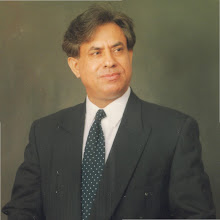

A Distinct Candle is Extinguished!
-
“I am announcing, with a heavy heart, the sudden demise of my beloved
father, Asif Javed Mir, due to heart failure on 18th December,2013. I
request to ever...
12 years ago

 Posts
Posts


